
WELCOME
It is a great honour and pleasure to welcome you to the hybrid 21st Congress of the Baltic Association of Dermatovenereologists in Kaunas city. This year’s congress slogan, “Bridging Science and Skin Health”, reflects our shared aspiration to connect the latest scientific achievements with everyday clinical practice, thereby enhancing our ability to care for our patients’ health and quality of life.
Dermatovenereology is a field in which science and art converge—from molecular research to empathetic communication with patients. At this congress, we will have the opportunity to share knowledge, discuss the latest discoveries, address current challenges, and seek the best possible solutions.
Kaunas—a city where history meets modernity—provides an excellent setting for this dialogue. Here, in the heart of the Baltic region, we strengthen ties among scientists, physicians, and society, building bridges between theory and practice and between innovation and daily clinical work.
I hope that this congress will be not only a celebration of science but also a source of inspiration, fostering new ideas, collaboration, and friendship. May our collective efforts contribute to a healthier future, in which the skin—as the mirror of human health—is protected and nurtured with even greater responsibility.
Welcome to Kaunas, welcome to the Congress, and welcome to a shared journey where science and health unite into one bridge.
Prof. Skaidra Valiukeviciene
Congress Chair
21st Congress of the Baltic Association of Dermatovenereologists
LOCAL ORGANISING COMMITTEE
INTERNATIONAL SCIENTIFIC COMMITTEE
Chair Skaidra Valiukeviciene, Kaunas, Lithuania
Igor Bartenjev, Ljubljana, Slovenia
Abel Chih-Hung Lee, Kaohsiung, Taiwan
Steffen Emmert, Goettingen, Germany
Ruta Ganceviciene, Vilnius, Lithuania
Harald P.M. Gollnick, Magdeburg, Germany
Ilona Hartmane, Riga, Latvia
Kulli Kingo, Tartu, Estonia
Robert S. Kirsner, Florida, USA
Vesta Kucinskiene, Kaunas, Lithuania
Tadas Raudonis, Vilnius, Lithuania
Andris Rubins, Riga, Latvia
Silvestrs Rubins, Riga, Latvia
Robert Allen Schwartz, New Jersey, USA
Iryna Smolanka, Uzhgorod, Ukraine
Jacek Szepietowski, Wroclaw, Poland
Wolfgang Uter, Erlangen, Germany
Christos Zouboulis, Dessau, Germany
Sanita Zigure, Riga, Latvia
ORGANISERS
PARTNERS
This project of the Baltic-German University Liaison Office is supported by the German Academic Exchange Service (DAAD) with funds from the Foreign Office of the Federal Republic Germany.
CONGRESS VENUE
(5 November 2026)
RADISSON HOTEL KAUNAS, Alfa hall
The first day of the Congress will take place at the Radisson Hotel Kaunas Conference Centre.
Radisson Hotel Kaunas is located in the heart of the city, near the famous, long pedestrian street named the Freedom Avenue (Laisvės Alėja).
ADDRESS
K. Donelaičio St. 27, Kaunas


CONGRESS VENUE
(6 November 2026)
THE SEIMAS OF THE REPUBLIC OF LITHUANIA, Constitution Hall
The second day of the Congress will be held at the Seimas (the Parliament) of the Republic of Lithuania.
The Parliament is located in the heart of Vilnius, close to the city centre and major landmarks.
ADDRESS
Gedimino Ave. 53, Vilnius


ARRIVAL & TRAVEL
ARRIVAL TO LITHUANIA
Lithuania is easily accessible via various modes of transport. The infrastructure here is well developed; moreover, the country is not large, and thus travel between the major cities is easy and convenient. The airports are typically 15–20-min. drive from the city centre, and the local and international bus network is extensive.
 BY PLANE
There are three international airports in Lithuania that connect the country with a number of European capital cities and some major international air travel hubs outside of Europe:
Vilnius International Airport (VNO);
Kaunas International Airport (KUN);
Palanga International Airport (PLQ).
Most flights arrive at Vilnius International Airport, the main airport of Lithuania. Kaunas International Airport serves mostly low-cost airlines, such as Ryanair. Palanga International Airport, located near the seaside resort of Palanga, mostly offers short and mid-range routes to destinations in Europe. This airport is the smallest in the country and is a convenient gateway to western Lithuania, the beach resorts, and the seaport of Klaipėda.
Getting to Kaunas city from Vilnius International Airport
Kaunas can easily be reached by public transport:
- by bus
This is a journey with one transfer. Buses are located outside the Arrival Hall. Tickets can be bought from the driver. First you have to reach Vilnius Bus station, and then take a bus to Kaunas Bus Station.
- by train
This is also a journey with one transfer. A special train runs between Vilnius International airport and Vilnius Railway Station on a regular basis. The airport train station is located directly in front of the airport. Tickets are sold on board. After you reach Vilnius Railway Station take a train to Kaunas Railway Station.
Getting to Kaunas city from Kaunas International Airport
Kaunas can easily be reached by bus No. 29, which goes from Kaunas International Airport straight to the city centre. Buses are located outside the Arrival Hall. Tickets can be bought from the driver for 1 Eur. The bus runs once or twice every hour, and the ride takes about 45 min.
 BY BUS
A number of large international bus companies with an extensive route network operate in Lithuania. There are frequent bus connections with most European capitals and some other large cities from the main Lithuanian cities - Vilnius, Kaunas, and Klaipėda.
Ecolines
Eurolines
Luxepress
Coming to Lithuania by bus is an easy and convenient option. A bus is also a good choice for visiting neighbouring countries, Riga-Vilnius connection being particularly popular with several daily departures.
 BY TRAIN
Vilnius Train Station is conveniently connected to Vilnius International Airport by a special railway shuttle line.
Litrail
 BY CAR
Kaunas is accessible by highway E67 running from Helsinki to Prague via Tallin, Riga, and Warsaw. Kaunas is also is linked to Vilnius to it's east and to Klaipeda on the Baltic coast via the A1 motorway. There is no highway toll fee in Lithuania.
SELF-ORGANISED PRIVATE TRANSFERS
Recommendations:
- Bolt taxi (recommended)
You just need to download the app to your device in advance and order the taxi a few minutes before your trip. You can use this app not only for transfer from the Airport but also for all travel in Kaunas city
- Ollex transport services
You can select a different service: car rental, a private transfer, or an airport express
- City Bee
Car rental service
KAUNAS
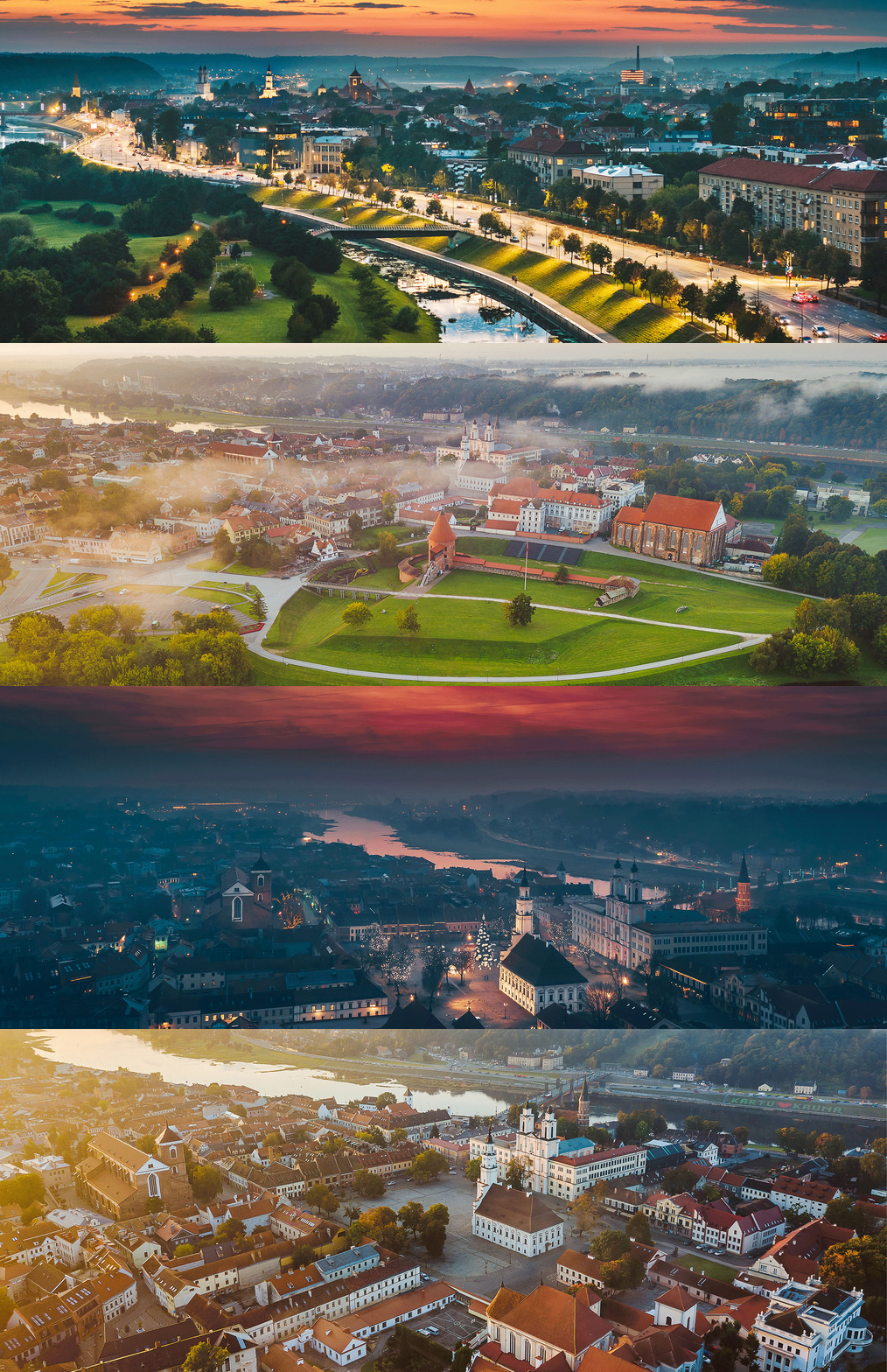
Kaunas is the second-largest city in Lithuania with about 300 thousand inhabitants. Kaunas is located in the central part of Lithuania on the confluence of the two largest Lithuanian rivers – the Nemunas and the Neris. Kaunas is located 100 kilometres from the capital Vilnius and 212 kilometres from the country's major seaport Klaipeda.
Kaunas is an attractive centre of business and industry as well as science, studies ,and culture. Famous music, dance, and visual art festivals as well as exceptional projects are held in Kaunas. It is the provisional capital of Lithuania, famous for its colourful history, cosy parks, a remarkable and wonderful Old Town, and interwar spirit. Visit KAUNAS
OLD TOWN
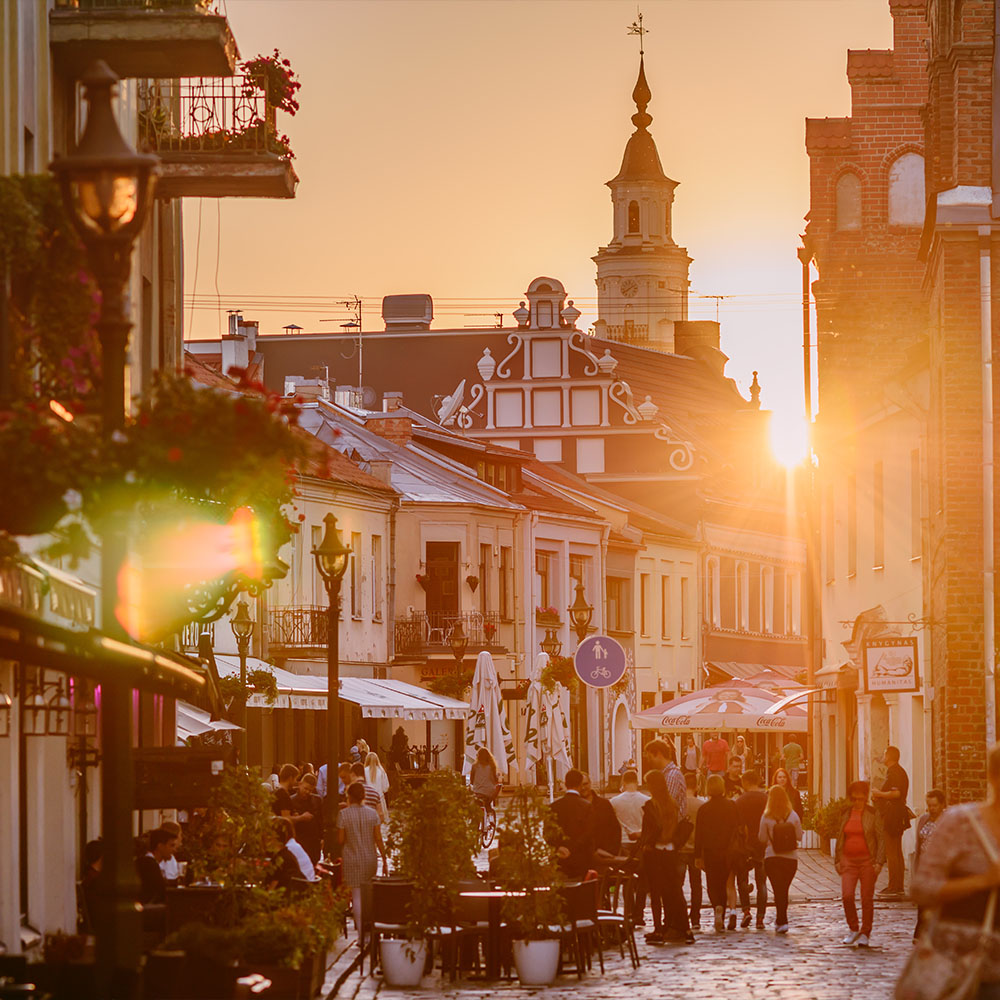
Kaunas Old Town located to the east of the confluence of the rivers occupies 144 hectares. There are a lot of surviving Gothic, Renaissance and Baroque buildings, especially in the western part of the Old Town. Many notable buildings and facilities are located in the Old Town, such as the Kaunas Town Hall, the Kaunas Castle and the Historical Presidential Palace, the gothic House of Perkūnas, the Archcathedral Basilica of Apostles St. Peter and St. Paul of Kaunas , the Church of St. Gertrude, the Church of Vytautas the Great, and many other churches.
Vilnius street is the most beautiful street of the Old Town and is reserved for pedestrians only. Some buildings have survived since the 16th century, and some of them have been reconstructed. Even the unique telephone booths are a clear indication that you are walking along the street that connects the old and the new parts of the city.
CULTURE
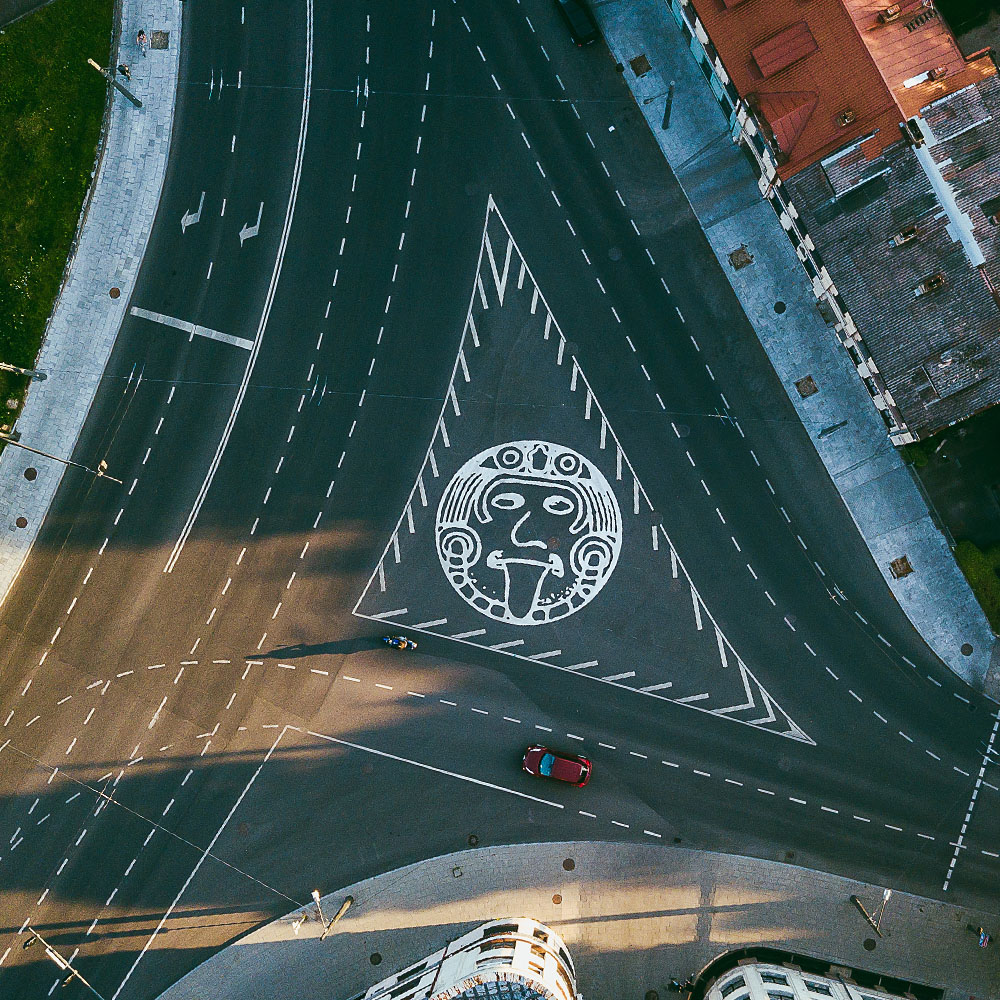
The George Maciunas square in Kaunas. Probably every one of you has heard of FLUXUS. The founder of this movement is George Maciunas, and he was born in our city.
Kaunas is a great cultural centre. Kaunas has 7 professional and 10 amateur theatres, 20 folklore ensembles, and various other arts and sports groups. The main state theatres in Kaunas are the Musical Theatre, the National Drama Theatre, and the Puppet Theatre. The Kaunas State Musical Theatre palace on the central street of Kaunas was built in 1892. The city is also a home to the modern dance theatre Aura, Kaunas pantomime theatre, the Little Theatre, the Chamber Theatre, Kaunas State Choir, and Kaunas Symphony Orchestra. Visit the M.K.Čiurlionis National Museum of Art.
ARCHITECTURE
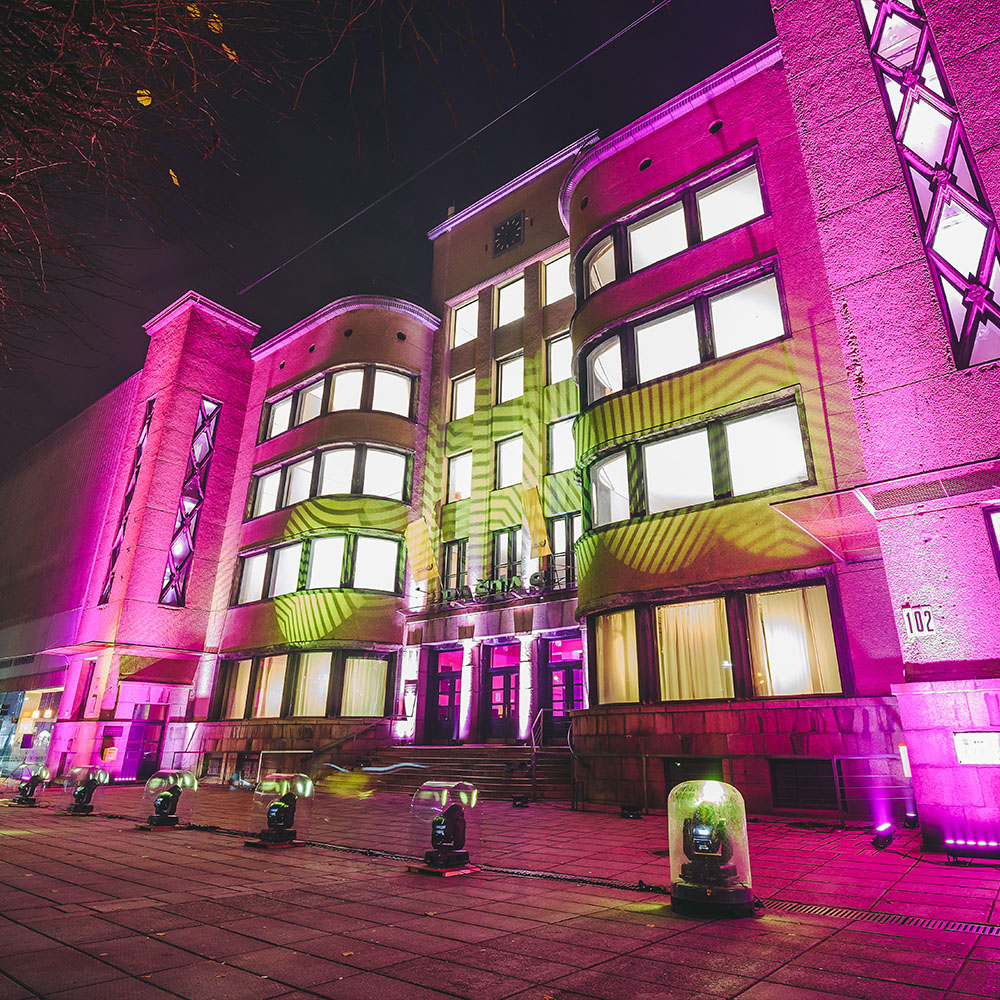
According to The Guardian, Kaunas is a surprising hotspot for Art Deco. In 2015, Kaunas was granted the sign of European heritage and was included into the list of UNESCO Design Cities. Nowadays, this is an exceptional inheritance, witnessing the golden period of the flourishment of the city, when Kaunas as a historical capital of Lithuania developed its modernistic architecture in parallel with other European cities.
In Lithuania, modernistic architecture developed into its own specific form and is therefore called the Kaunas school of architecture.
Do not miss a chance to visit the most important objects of the interwar period – Kaunas Garrison Officer's Club, Kaunas our Lord Jesus Christ's Resurrection Basilica, Vytautas the Great War Museum, and many more.
SPORTS
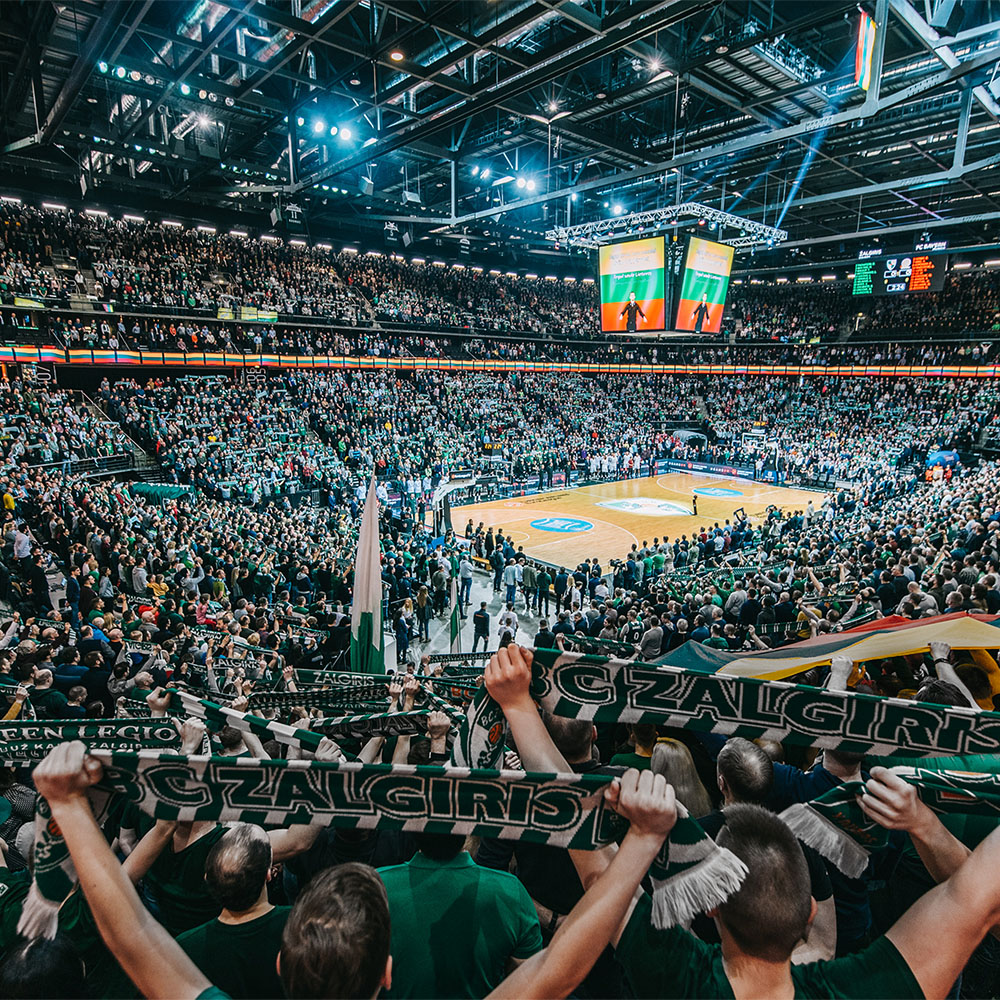
The name of Kaunas is inseparable from the legendary basketball team ŽALGIRIS and its star Arvydas Sabonis. Go to a basketball game if there is one when you come to Kaunas. Even if you are not a basketball lover, you will have a wonderful experience there. The atmosphere is incredible. Basketball is of an exceptional importance for Lithuanian people. The basketball club ŽALGIRIS from Kaunas is the oldest and the most successful men's basketball club in Lithuania. Arvydas Sabonis, the brightest basketball star in Lithuania, played for the ŽALGIRIS team. The first official basketball game in Kaunas was held in 1922. Kaunas Sports Hall was built in 1939. In this arena in 1939, Lithuanian men's basketball team won the gold medal at the FIBA European Championship for the second time.

LITHUANIA
If you think Lithuania is somewhere in South America, think again. If your eyes are fixed on a map of the Balkans, press another key on your keyboard. So where is Lithuania located? The lyrics of one of Lithuanian songs say it is in the middle of Europe – and indeed, those are not just song lyrics. Using the method of gravitational centres, researchers at the National Institute of Geographic and Forest Information in France established that the geographical centre of Europe is in fact located in Lithuania. The country is only a few hours away from other European capitals by plane and can also be easily reached by bus, train, or even boat. So welcome to this country of Northern Europe, to the very centre of Europe… to Lithuania. More information: Lithuania Travel.
The country has preserved many pagan and folk traditions that are still alive in villages. On the other hand, big cities are rich with vibrant cultural life and endless entertainment opportunities. There are numerous museums that have accumulated huge collections, national and private art galleries, the never-ending buzz of theatre and music halls, fascinating nightlife, and a variety of entertainment options and sports events.
Some colours can be made in a lab, but nothing beats natural and vivid colours that reveal themselves when you visit a new country. Join Lukas at the Super Secret Institute of Colours in Lithuania as he searches for unique colours and hues. Or simply come to Lithuania for colours you never knew existed.
Total area: 65,300 sq. km
Population: 2 795 680 (in 2021)
Language: Lithuanian
Currency: Euro
Local time: GMT + 2 hours (EET)
International telephone code: +370
Geographical location: The Republic of Lithuania lies on the eastern coast of the Baltic Sea. Lithuania has a borders with Latvia, Belarus, Poland and the Russian Federation (the area of Kaliningrad Oblast (region) ).
Membership: EU, NATO, Schengen, the UN and the OECD
QUICK LINKS
CONFERENCE SECRETARIAT
EVENTAS (PCO&AMC)
Phone: +370 686 44483
Email: BADV2026@eventas.lt
www.BADV2026Kaunas.org
FOLLOW US
#BADV2026

© 2026 EVENTAS (PCO&AMC) | All rights reserved.